

AI Europe
EU Parliament demands human oversight of AI in EU bodies
Parliament wants AI in the EU institutions to stay under full human oversight and proposes its own AI Observatory. What it means for Luxembourg.
Key takeaways
- Resolution adopted on 12.11.2026 by 405 votes to 133 with 60 abstentions, not legally binding
- Budget-neutral Parliament AI Observatory and priority for European, EU-hosted AI tools
- The AI Act already applies to EU institutions, supervised by the EDPS
On this page
The European Parliament wants AI in the EU institutions to work only under full human oversight. It adopted a resolution to that effect in Brussels on 12.11.2026 by 405 votes to 133, with 60 abstentions.
The text is titled "Institutional aspects of artificial intelligence in the context of European integration" (procedure 2025/2118(INI)). The rapporteur is Emmanouil Kefalogiannis, a Greek EPP member of the Committee on Constitutional Affairs. It is an own-initiative report: it does not bind the Commission or the Council, but it sets out Parliament's position on AI in its own administration and in lawmaking.
What does Parliament call for?
The core is human oversight. AI use within the institutions must remain "human-centred", says paragraph 4, and stay under full human oversight, meaning that a person must effectively supervise any AI tool while it is in use. AI must never replace the political responsibility of human beings. In the legal field it should remain strictly an auxiliary tool, for research or administrative support, without taking part in judicial decision-making. People affected by decisions taken or supported by AI in public administrations should have a right to meaningful human intervention.
Other points in the resolution:
- European tools: the institutions should prioritise AI tools developed in the EU, by European actors and hosted within the EU.
- New fundamental rights: the Charter should include, among others, a right to the protection of personal identity and likeness against deepfakes and a right to algorithmic transparency.
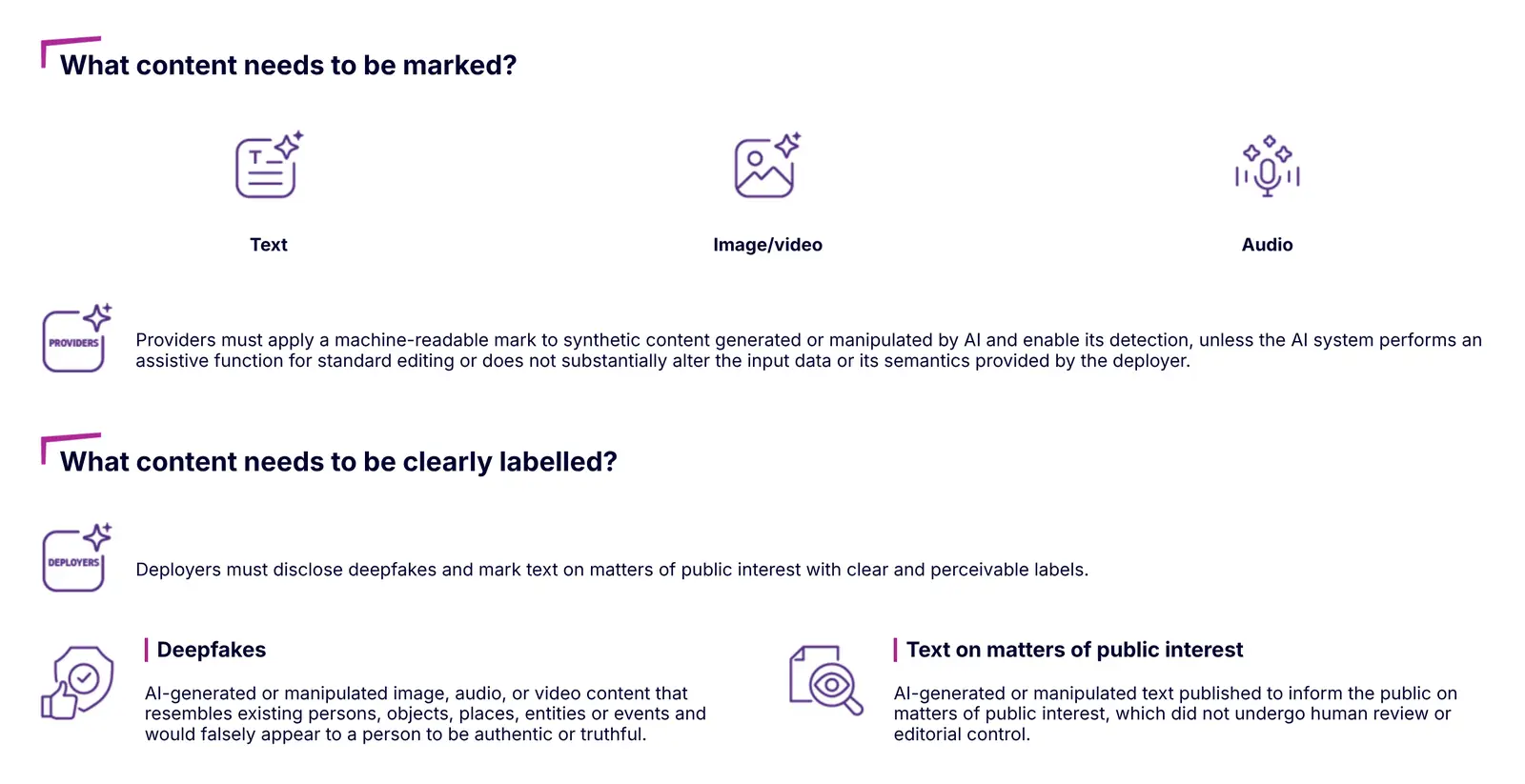
- Elections: Parliament calls for a reform of EU electoral law and for enforcement of the AI Act's transparency obligations for AI-generated content.
- AI Office: the Commission's AI Office should get more financial, technical and human resources.
- Global rules: for AI with global security implications, Parliament suggests an international treaty modelled on the Nuclear Non-Proliferation Treaty.
What would the AI Observatory do?
Parliament proposes a dedicated administrative unit, the "European Parliament AI Observatory". It would support Parliament's committees, carry out ex post evaluation of AI legislation and analyse how AI affects the EU's institutional balance and democratic processes. It would build on the European Parliamentary Research Service and the Panel for the Future of Science and Technology, so that it can be set up in a budget-neutral way. Parliament calls on the Chair of the AI Board to invite the Observatory to the Board's meetings.
"By humans, for humans, with humans," said Kefalogiannis, paraphrasing Abraham Lincoln. AI should not become "the last invention that humans will ever need to create".
Weekly, Thursday morning, Central European Time.
The Thinking briefing
One email a week: what changed in European business software, which prices moved, and which comparison we published. No sales mail.
Does the AI Act apply to the EU institutions?
Yes. The AI Act also covers Union institutions, bodies, offices and agencies when they provide or use AI systems. The European Data Protection Supervisor (EDPS) acts as their market surveillance authority (Article 74(9)). The only exception is the Court of Justice of the EU acting in its judicial capacity. The EDPS can impose fines of up to EUR 1.500.000 for prohibited practices under Article 5 and up to EUR 750.000 for other infringements (Article 100). Anyone who suspects that an EU institution's AI system breaches the AI Act can complain to the EDPS.
So the resolution creates no new obligations. It asks for more scrutiny by Parliament itself and for closer coordination between the AI Office, the AI Board, the EDPS and national authorities.

What does this mean for Luxembourg?
Luxembourg is one of the three seats of the EU institutions. It hosts the European Parliament's Secretariat-General, Commission services such as Eurostat and the Publications Office, the Court of Justice of the EU, the European Court of Auditors, the European Public Prosecutor's Office, the Translation Centre, and the European Investment Bank and European Investment Fund.
For these bodies and their staff, the resolution is a political signal: use AI for translation, statistics, research or administration, but keep humans responsible and prefer European tools hosted in the EU. The institutions are also targets of AI-assisted attacks themselves, as the recent cyber campaign against the European Commission showed.
For IT and AI suppliers working for the institutions, the preference for European, EU-hosted solutions could play a role in future tenders. It is not binding, however. Luxembourg public bodies and companies are not supervised by the EDPS but by the national authorities that bill 8476 is meant to designate. The duties that already apply to companies using AI are summed up in our AI Act checklist for SMEs.
What happens next?
Parliament forwards the resolution to the Council and the Commission. Whether and when it sets up the AI Observatory is an internal decision. The text sets no timetable.
Sources
- [1] European Parliament press release: AI in democracy: ensuring oversight and compliance with EU values (12.11.2026) accessed 2026-11-20
- [2] European Parliament, Texts adopted P10_TA(2026)0378: Institutional aspects of AI in the context of European integration accessed 2026-11-20
- [3] Legislative Observatory: procedure 2025/2118(INI) accessed 2026-11-20
- [4] AI Act Service Desk: Article 3 (definitions, point 48) accessed 2026-11-20
- [5] AI Act Service Desk: Article 74 (market surveillance) accessed 2026-11-20
- [6] AI Act Service Desk: Article 100 (fines on Union institutions) accessed 2026-11-20
- [7] EDPS: Artificial Intelligence Act accessed 2026-11-20
- [8] Luxembourg.public.lu: Luxembourg, siège institutionnel de l'Union européenne accessed 2026-11-20
- [9] Gouvernement.lu: Union européenne et organisations internationales accessed 2026-11-20
- [10] Curia: History of the buildings accessed 2026-11-20
- [11] EC Audiovisual Service: European Union Capitals, Luxembourg (P-046943/00-64) accessed 2026-11-20
- [12] European Parliament Multimedia Centre: EP Plenary session, November 2026, Voting session (EP-213237B) accessed 2026-11-20
- [13] European Parliament: Legal notice (reuse of multimedia items) accessed 2026-11-20
- [14] Chambre des Députés: Projet de loi 8476 accessed 2026-11-20