
Startups
EU Inc: founders ask Brussels to pull its own plan
EU-INC and Startups for Europe want the Commission to withdraw and re-table the EU Inc proposal, because the Council's position dropped the central register and capped stock options.
Key takeaways
- On 19.11.2026 EU-INC and Startups for Europe asked Ursula von der Leyen to withdraw the EU Inc proposal and table it again in its original form.
- According to the groups, the Council position of October removed the central EU register and simplified insolvency and caps stock options at 750 employees or 150 million EUR turnover.
- The trade union confederation ETUC reports that the Council Legal Service considers Article 114 TFEU the wrong legal basis and a directive under Article 50 the right instrument.
- Luxembourg's government supports the 28th regime; founders here can already use the SARL-S with 1 EUR capital, but only for natural persons and without EU wide reach.
On this page
The founders behind the EU Inc campaign want Brussels to stop its own startup law. EU-INC and Startups for Europe asked Commission President Ursula von der Leyen on 19.11.2026 to withdraw the EU Inc proposal and table it again in its original form.
Their reason: they say the member states' position has hollowed out the reform. For founders in Luxembourg, the question is whether the planned European company form will still be worth using, or whether it ends up as one more national variant.
What EU Inc was meant to be
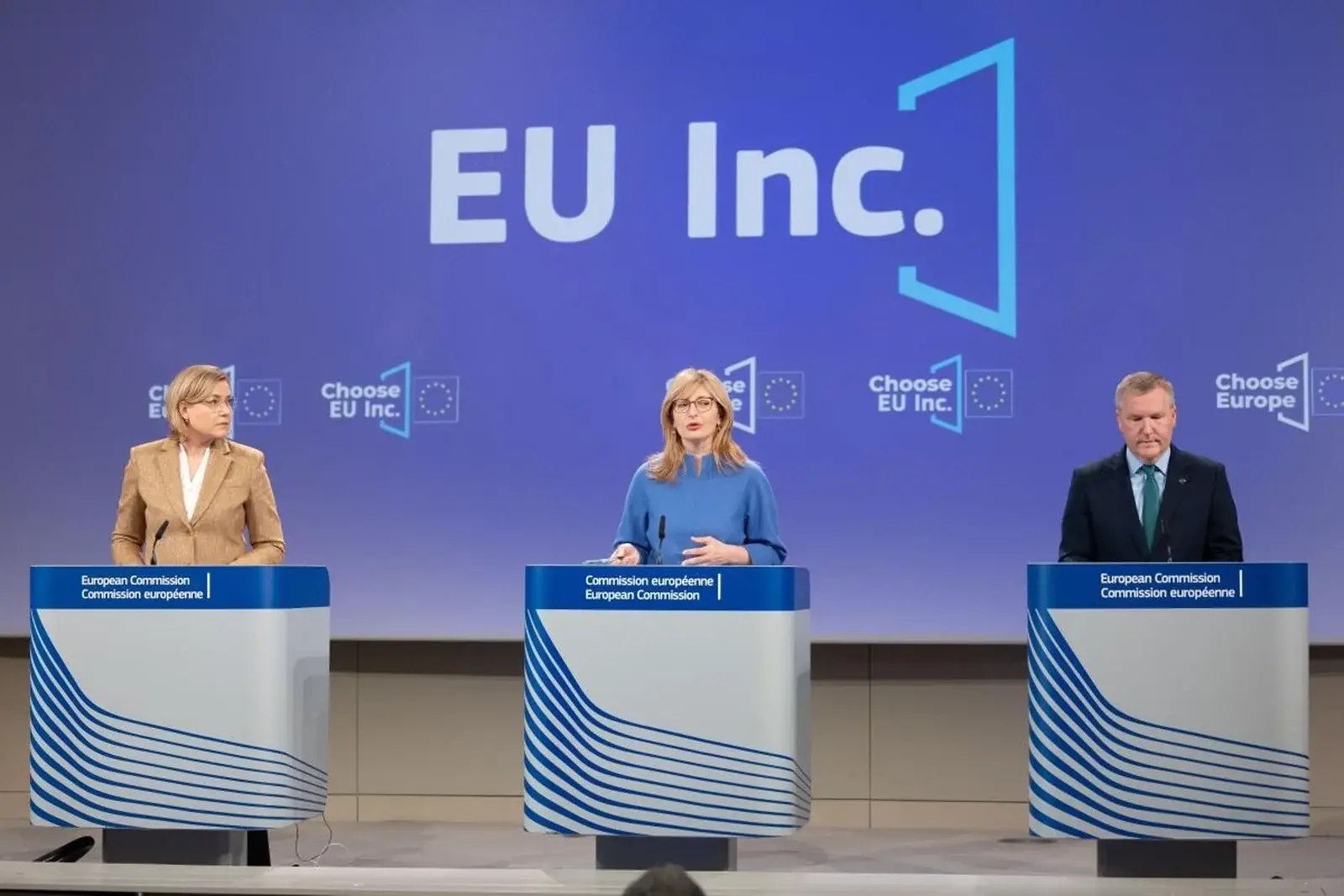
The Commission presented the proposal for the "28th regime" on 18.03.2026, a regulation numbered COM(2026) 321. The idea is an optional company form alongside the national ones, with fully digital registration within 48 hours, for at most 100 EUR and without minimum capital. It also includes simplified digital insolvency, digital share transfers and an EU scheme for employee stock options with deferred taxation. The Commission's factsheet also promised a central EU register for company information.
At the time, von der Leyen pointed out that founders who want to scale face 27 legal systems and more than 60 forms, according to the Commission's press release.
What the Council changed
The Council adopted its negotiating position on 23.10.2026, according to its press release. It keeps registration within two days for at most 100 EUR, but gives member states 21 months to implement the rules and limits the stock option scheme to small mid-caps. The founders' groups date the mandate to 19.10.2026, the date of the preparatory Council note.
In their press release, published by Tech.eu, EU-INC and Startups for Europe list four losses:
- Choice of registration, weakened: national authorities get more room to challenge where a company registers.
- Employee stock options, restricted: the scheme stops at 750 employees or 150 million EUR in turnover.
- Central EU register, removed: the 27 national registers stay.
- Simplified insolvency, removed: different national rules remain.
Their test is simple: would a founder pick EU Inc over a Delaware C-Corp? "The Commission's original proposal passes that test. The Council's mandate does not." Co-initiator Andreas Klinger warns that founders "will simply incorporate elsewhere" if the core elements are stripped out. According to Politico, the groups also put the demand to Commissioners Henna Virkkunen and Ekaterina Zaharieva at the Slush conference in Helsinki.
The campaign site eu-inc.org gives more than 26.000 founders, investors and operators from 27 countries as supporters. Handelsblatt expects the new legal form to be delayed.
Weekly, Thursday morning, Central European Time.
The Thinking briefing
One email a week: what changed in European business software, which prices moved, and which comparison we published. No sales mail.
Regulation or directive: the legal basis dispute
A second front is the legal form of the law itself. The Commission based the proposal on Article 114 TFEU, the internal market article, and chose a regulation that would apply directly. In an open letter of 23.06.2026, the European Trade Union Confederation (ETUC) writes that the Council Legal Service considers this basis incorrect. According to the letter, the Legal Service found that a directive based on Article 50 TFEU, the company law article, would have been the right instrument, and that a regulation based on Article 114 carries a "significant and high" risk of annulment by the Court of Justice.
The opinion itself has not been published. Unions and founders now both call for a withdrawal, but for opposite reasons: the unions want more worker protection, the founders want the original text back.
Other voices and the timetable
Iceland, Liechtenstein and Norway published a joint comment on 20.11.2026. EU Inc should complement national law rather than replace it, keep safeguards against fraud and money laundering, and be closely monitored because earlier European company forms were little used.
In the European Parliament, the file 2026/0074(COD) is still in the legal affairs committee under rapporteur René Repasi, with the status "awaiting committee decision", according to the Legislative Observatory. Negotiations with the Council can only start once Parliament has a position. The European Council wants a political agreement by the end of 2026.
What this means for founders in Luxembourg
The Luxembourg government supports the principle. In its answer to parliamentary question 3792 of 24.04.2026, it calls the 28th regime an opportunity for an ecosystem of "près de 800 start-ups". It also stresses legal certainty, the fight against fraud and money laundering, and national labour law.
Founders in Luxembourg already have a cheap option today. The SARL-S can be set up with 1 to 12.000 EUR of capital and without a notary, but only by natural persons, and it must be registered with the RCS run by Luxembourg Business Registers. EU Inc would add value above all for cross border operations: one form in all member states, digital share transfers and a common stock option scheme. Without the central register and with a capped stock option scheme, an EU Inc founded in Luxembourg would still be filed in the national register, and its advantage over the SARL-S would shrink.
Until there is an agreement, nothing changes for new companies. How European scaleups raise large rounds today is shown by our reports on Payhawk and Fractile.
Questions and answers
Has the Commission withdrawn the EU Inc proposal?
What did the Council change?
Does anything change for founders in Luxembourg now?
Sources
- [1] Tech.eu: EU-INC calls on von der Leyen to withdraw and re-table EU Inc proposal (press release text) accessed 2026-11-20
- [2] EU-INC campaign site accessed 2026-11-20
- [3] Politico: Startups call on Commission to salvage or scrap EU Inc proposal accessed 2026-11-20
- [4] Handelsblatt: Gründer lehnen verwässerte neue europäische Firmenrechtsform ab accessed 2026-11-20
- [5] European Commission: EU Inc., a new harmonised corporate legal regime accessed 2026-11-20
- [6] European Commission: EU Inc. factsheet accessed 2026-11-20
- [7] EU-Kommission legt Vorschlag für EU Inc. vor (Vertretung in Deutschland, 18.03.2026) accessed 2026-11-20
- [8] Council of the EU: EU Inc, Council adopts position on a new EU corporate law for innovative companies accessed 2026-11-20
- [9] ETUC open letter to Commissioner McGrath on the 28th regime (23.06.2026) accessed 2026-11-20
- [10] EFTA: EEA EFTA States provide input on EU Inc. proposal accessed 2026-11-20
- [11] European Parliament Legislative Observatory: 2026/0074(COD) accessed 2026-11-20
- [12] Chambre des Députés: réponse à la question parlementaire n°3792 (24.04.2026) accessed 2026-11-20
- [13] Guichet.lu: Société à responsabilité limitée simplifiée (SARL-S) accessed 2026-11-20
- [14] EC Audiovisual Service P-069298: press conference on EU Inc. and the 28th regime (18.03.2026) accessed 2026-11-20