
AI Europe
EU Commission hit by AI-driven cyber campaign
The Commission confirmed on 19.11.2026 that an AI-generated cyber campaign detected on 22.10.2026 forced it to take systems offline; attacker and data loss remain unknown.
Key takeaways
- Commission spokesperson Thomas Regnier confirmed on 19.11.2026 an AI-generated cyber campaign, detected on 22.10.2026 and confirmed on 26.10.2026.
- Several applications were taken offline as a precaution; the Commission found no evidence of a breach affecting its staff as a whole.
- The tool's name, ARTEX, comes from an anonymous EU official quoted by Politico; CERT-EU and the FBI have warned about ARTEX since early November.
- Luxembourg firms under NIS2 must report significant incidents within 24 hours, and all exposed systems should be patched and protected with MFA.
On this page
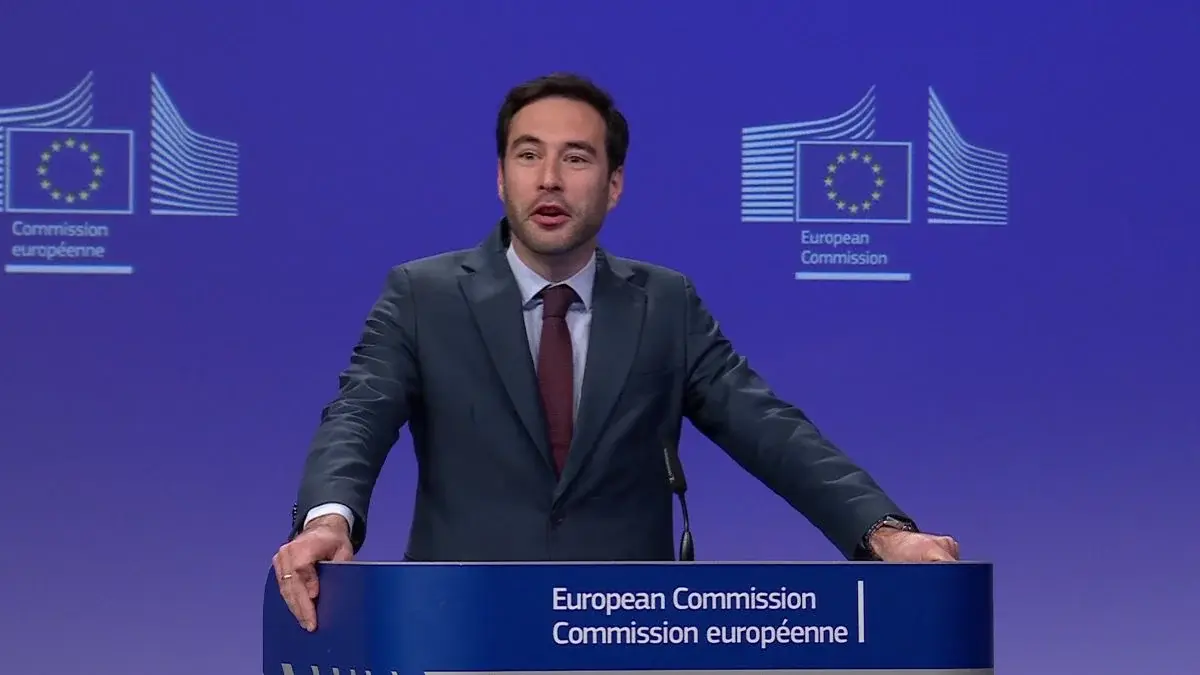
The European Commission has confirmed that it was hit by a cyber campaign carried out with artificial intelligence. Its spokesperson for digital affairs, Thomas Regnier, said on 19.11.2026 that the incident was detected on 22.10.2026 and that the investigation is still ongoing.
The Commission only spoke publicly after Politico's Brussels Playbook reported the attack on the morning of 19.11.2026. The AP news agency then reported that an official in Brussels said an AI-assisted attack had targeted the EU in October and that some digital tools remained offline. This article separates what the Commission confirmed on the record from what media report with reference to anonymous officials.
What did the Commission confirm?
At the Commission's midday press briefing on 19.11.2026, Regnier answered questions on the incident for almost nine minutes. The recording and a transcript are published by the Commission's Audiovisual Service. On the record, he said:
- The Commission "has recently taken necessary steps in response to a detected cyber campaign".
- As a protective measure, several applications were temporarily taken down, and most of them have since been restored.
- The incident was detected on 22.10.2026 and confirmed after an initial investigation on 26.10.2026.
- "We have not detected any evidence of a data breach affecting Commission staff as a whole."
- He was not aware of any ransom demand.
- It was "an AI generated cyber campaign", the "misuse of an AI tool", and the tool "is publicly available".
- The Commission is in close contact with CERT-EU and the European Data Protection Supervisor.
He declined to name an attacker ("on the attribution, I will not go there"), to say whether the attack is over, or to describe its scale. He did confirm that it was "a series of incidents".
What do the media report beyond that?
Several details come only from anonymous sources and have not been confirmed by the Commission:
- The tool's name: Politico quotes an EU official as saying CERT-EU had detected that "international hackers" used ARTEX, a publicly available AI tool built to find vulnerabilities. Regnier did not name the tool.
- The systems hit: according to Politico, Sysper, the internal platform for payslips, leave and timesheets, and MyPMO, the system for medical reimbursements, were affected, and the disruption lasted more than ten days. Euronews reports that the health insurance scheme JSIS was still unavailable on 19.11.2026.
- The internal response: Politico reports that the Corporate Management Board, the Commission's highest internal crisis body, met on the incidents and that Executive Vice-President Henna Virkkunen briefed the College.
Whether personal data was taken remains open. Regnier's wording, "staff as a whole", does not rule out that data of individual employees was affected.
Weekly, Thursday morning, Central European Time.
The Thinking briefing
One email a week: what changed in European business software, which prices moved, and which comparison we published. No sales mail.
What is ARTEX?
CERT-EU, the cybersecurity service of the EU institutions, published a warning about ARTEX on 05.11.2026. It describes the tool as an open-source, LLM-driven platform for autonomous penetration testing. An operator sets a goal in natural language, and AI agents carry out reconnaissance and testing steps with real tools. ARTEX has no model of its own; it connects to external language model providers.
According to CERT-EU, several threat actors worldwide have used ARTEX to automate their campaigns, and CERT-EU observed similar AI-driven activity against its own constituency, which "highly likely" involved ARTEX. The original author took the repository offline in October 2026, but independent forks remain available.
The FBI issued its own alert (FLASH-20261113-001) on 13.11.2026. It says malicious actors have used ARTEX since at least August 2026 against organisations in many sectors, including financial services and government. Some intrusions went from first targeting to privileged access in under three hours. CERT-EU's post does not name the Commission incident, so the link between the two rests on the Politico report.
What does this mean for companies in Luxembourg?
The attack targeted an EU institution, not Luxembourg companies. But the method is not tied to a single target: CERT-EU and the FBI both describe a freely available tool that searches internet-facing systems for weak spots at machine speed. CERT-EU's advice applies to any organisation:
- Identify internet-exposed IT assets and limit exposure to those that need it.
- Keep management and control panels off the internet and patch exposed systems first.
- Use multi-factor authentication on all critical systems and watch administrator accounts for unusual activity.
- Keep even minor findings in the remediation cycle, because AI tools can chain small misconfigurations into serious attack paths.
For many firms, there are also legal duties. Luxembourg transposed NIS2 with the law of 05.05.2026, which entered into force on 10.05.2026. Essential and important entities must report significant incidents to their competent authority. For sectors supervised by the ILR, the steps are an early warning within 24 hours of detection, an incident notification within 72 hours, and a final report one month later. Manufacturers of digital products have had to report actively exploited vulnerabilities under the Cyber Resilience Act since 11.09.2026, as explained in our article on ENISA's report and the CRA.
Companies that are not covered by NIS2 can turn to CIRCL, the Computer Incident Response Center Luxembourg, which receives incident reports and offers tools for defenders. On 19.11.2026, we found no specific notice on ARTEX on the websites of CIRCL or GOVCERT.LU. Firms that rely heavily on cloud services may also find our guide to a Microsoft 365 emergency plan useful.
What is still open?
The Commission has not said who is behind the campaign, how the attackers got in, whether the attack has ended or whether personal data was stolen. Regnier said he would not draw conclusions "as long as the investigation is ongoing". We will update this article when the Commission or CERT-EU publish more.
Sources
- [1] EC Midday press briefing of 19/11/2026: Cyber campaign against the European Commission, Q&A (video and transcript) accessed 2026-11-19
- [2] CERT-EU, From Penetration Testing to Cyber Threat: Beware of ARTEX (05.11.2026) accessed 2026-11-19
- [3] FBI FLASH-20261113-001: Threat Overview of ARTEX Autonomous Penetration Testing Framework (13.11.2026) accessed 2026-11-19
- [4] Politico Brussels Playbook: Cyberattack hits the Commission (19.11.2026) accessed 2026-11-19
- [5] AP: A cyberattack using artificial intelligence targeted the EU in October, official says (19.11.2026) accessed 2026-11-19
- [6] Euronews: EU Commission hit by large-scale cyberattack with data leakage unknown (19.11.2026) accessed 2026-11-19
- [7] RTÉ: AI tools used in cyberattack on European Commission (19.11.2026) accessed 2026-11-19
- [8] tagesschau: KI-gestützter Cyberangriff auf EU-Kommission (19.11.2026) accessed 2026-11-19
- [9] ILR, NIS 2 accessed 2026-11-19
- [10] ILR, Notification incident accessed 2026-11-19
- [11] CIRCL, Computer Incident Response Center Luxembourg accessed 2026-11-19
- [12] GOVCERT.LU accessed 2026-11-19
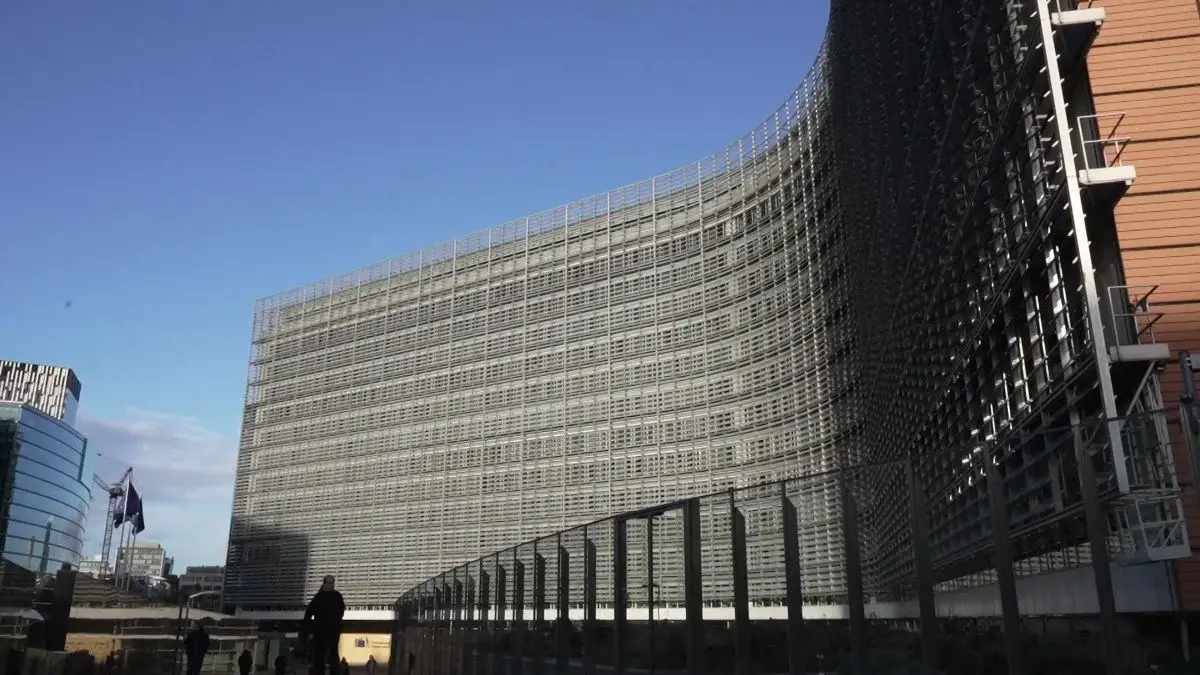
- [13] EC Audiovisual Service, Exterior views of the Berlaymont building (19.11.2026) accessed 2026-11-19
- [14] EC Audiovisual Service, Copyright and conditions of use accessed 2026-11-19