
AI chips
Fractile raises 649 Mio. EUR for AI inference chips
The London start-up raised 720 million US dollars at a reported 7 billion valuation and plans its first chips for 2027, with US funds in the lead.
Key takeaways
- Fractile raised 720 million US dollars, around 649 Mio. EUR, in a Series C announced on 11.11.2026.
- The UK government confirms a round of over 500 million pounds at a valuation of over 5 billion pounds.
- Thrive Capital, Founders Fund, Lightspeed and Redpoint led the round, with the UK Sovereign AI fund and the British Business Bank taking part.
- Fractile stacks DRAM on top of logic for inference and plans its first chips and systems in 2027.
- For MeluXina-AI nothing changes for now: its 1.008 NVIDIA GPUs are under contract.
On this page
London chip start-up Fractile has raised a Series C of 720 million US dollars, around 649 Mio. EUR, at a reported valuation of 7 billion US dollars, around 6,3 Mrd. EUR. The money is meant to bring its first AI inference chips to market in 2027.
The round was announced on 11.11.2026. The UK government confirmed it the same day, two days before EU leaders meet in Dublin for their first strategic debate on artificial intelligence.
What exactly was announced?
The most solid primary source is the UK government press release of 11.11.2026. It says the state Sovereign AI Venture Fund and the British Business Bank are backing Fractile "as part of a round worth over £500 million" and that the round "values the company at over £5 billion". It names CapitalG, Lightspeed and Redpoint as further investors.
The precise dollar figures come from the company and the press. Fractile told Reuters that it raised 720 million US dollars. The valuation of 7 billion US dollars was reported by the Financial Times and by a Reuters source, as TechCrunch notes. Fractile itself has not published a press release on its website. Its CEO Walter Goodwin announced the round in a LinkedIn post, quoted by TechCrunch and DCD. The euro figures of 649 Mio. EUR and 6,3 Mrd. EUR are conversions published by EU-Startups and FrenchWeb. Sifted had already reported on 29.10.2026 that company filings showed 540 million pounds in new Series C funding.
Who is investing?
According to Reuters, TechCrunch and DCD, the round was led by Thrive Capital, Founders Fund, Lightspeed and Redpoint. DCD lists Dragoneer, DST Global, BlackRock, T. Rowe Price and CapitalG, the venture arm of Alphabet, as new investors, with Accel, Conviction and Felicis returning. EU-Startups also names Elad Gil, Bain Capital Ventures, SV Angel, Shopify Ventures, Gigascale Capital, 20VC and the London fund Balderton.
On the public side, the Sovereign AI fund and the British Business Bank took part. DCD reports that neither disclosed the size of its stake.
Weekly, Thursday morning, Central European Time.
The Thinking briefing
One email a week: what changed in European business software, which prices moved, and which comparison we published. No sales mail.
What does Fractile build?
Fractile was founded in 2022 by Walter Goodwin, then a doctoral researcher at the University of Oxford, and Yuhang Song. It has sites in London and Bristol and, according to The Next Web, offices in the US and Taiwan.
The company focuses on inference, the stage where a trained model produces answers. DCD has described the approach as in-memory compute, meaning calculations run very close to or inside memory. TechCrunch writes that after a pivot the design now centres on DRAM stacked directly on top of the logic chip. The goal is to escape the usual trade-off: fast but small SRAM, or large but expensive HBM, the high-bandwidth memory used on today's GPUs.
The company's claims, which have not yet been independently tested:
- Its 3D stack is meant to deliver substantially more bandwidth than HBM and more capacity than SRAM, according to EU-Startups.
- Goodwin told the FT that inference could become up to 10 times faster, as reported by The Next Web.
- In his LinkedIn post he wrote that Fractile had extracted "20x higher speeds from DRAM memory".
No commercial chip exists yet. Goodwin wrote that the funding "will see us ship our first chips and systems next year", meaning 2027.
How fast has Fractile grown?
- 07.2024: Fractile emerges from stealth with 15 million US dollars in seed funding, according to Fortune.
- 05.2026: a Series B of 220 million US dollars, reported by the Wall Street Journal on 13.05.2026, at a valuation of around 1 billion US dollars according to The Next Web.
- 11.11.2026: the Series C of 720 million US dollars.
- 2027: first chips and systems planned.
What does this mean for European AI sovereignty?
The timing is pointed. The steering note for today's informal summit in Dublin says Europe "remains heavily dependent on non-European providers" from computing power to semiconductors. It warns that for large, high-risk investments "European investors cannot yet follow, and non-EU capital often takes over".
Fractile fits that picture. The British state and Balderton are in the round, but the four lead investors are US venture firms. Fractile is also a British company, and the UK is not part of the EU. EU programmes such as the AI Factories therefore do not fund it. Our report on the summit's conclusions follows tonight.
What could it mean for data centres and MeluXina-AI?
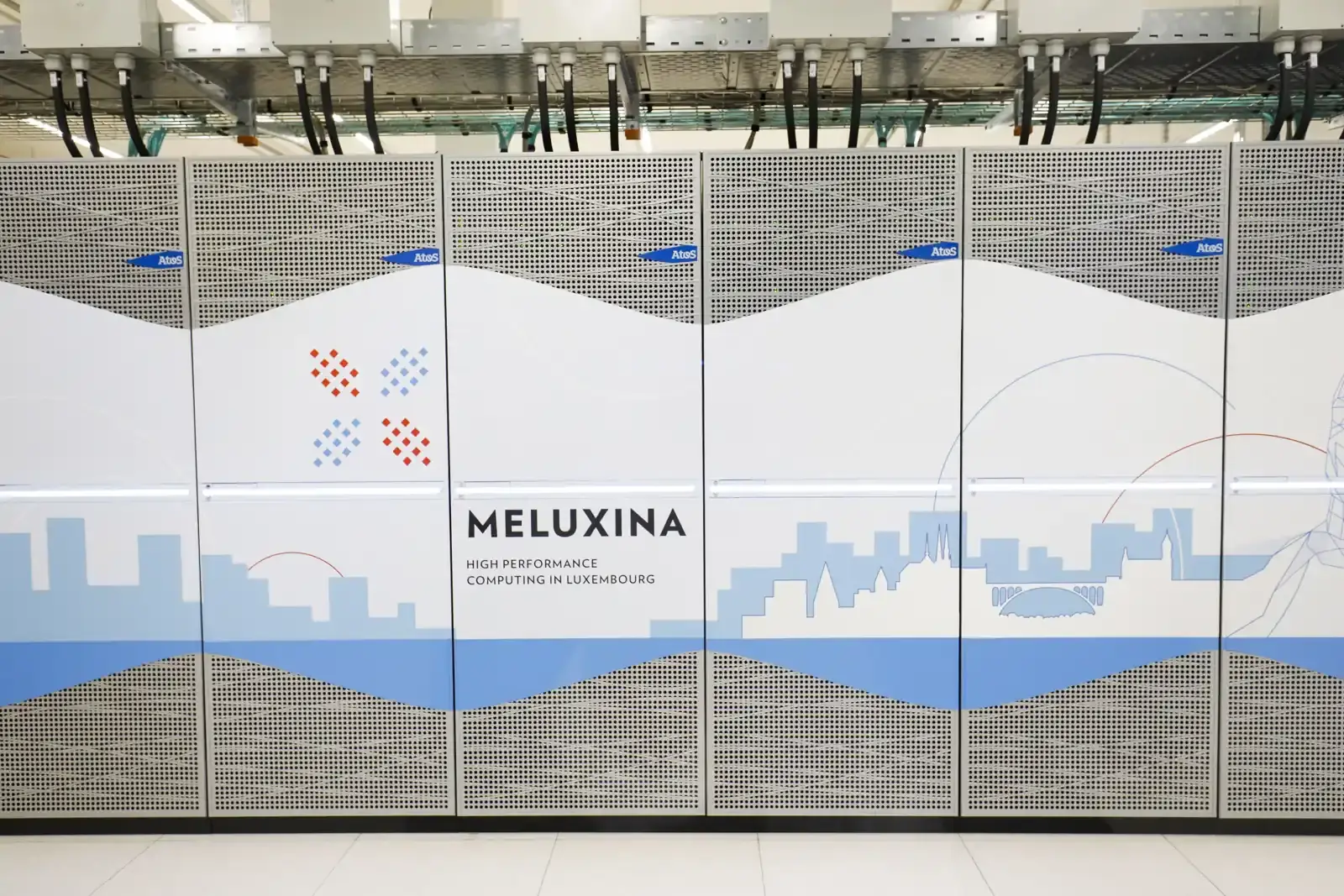
For now, nothing changes for Luxembourg. MeluXina-AI, the supercomputer of the Luxembourg AI Factory, is under contract: 1.008 NVIDIA GPUs on 252 nodes, owned by the EuroHPC JU and run by LuxProvide, with access planned from 2027.
That GPU base depends on one supplier, whose chief executive Jensen Huang resigned on 12.11.2026. Inference chips like Fractile's aim at exactly the workloads that keep a system busy once models are deployed. If Fractile delivers in 2027 as planned, European operators will gain an alternative to evaluate in future tenders. That depends on performance figures that do not exist yet.
The bottleneck is not only chips. Nebius has just pushed back part of its AI capacity because third-party data centre sites are late. Faster, more efficient chips only help where power and space are available.
What remains open?
- The exact amounts paid in by the Sovereign AI fund and the British Business Bank are not public.
- There are no independent benchmarks of a Fractile chip.
- Who will manufacture the chips, and at what volume, has not been disclosed.
- The FT reports that Anthropic is interested in becoming an early customer, according to The Next Web. Neither company has confirmed this publicly.
Sources
- [1] Sovereign AI and British Business Bank invest in British firm developing the next generation of AI hardware accessed 2026-11-13
- [2] Fractile, une start-up britannique spécialisée dans les puces d'IA, atteint une valorisation de 7 milliards de dollars (Reuters via Boursorama) accessed 2026-11-13
- [3] With $720M round, Britain's Fractile gets a leg up in the race for AI chips accessed 2026-11-13
- [4] UK chip startup Fractile valued at $7bn following $720m Series C funding round accessed 2026-11-13
- [5] London's Fractile secures massive €649 million Series C to challenge Nvidia accessed 2026-11-13
- [6] FRACTILE lève 649 millions d'euros accessed 2026-11-13
- [7] London's Fractile raises $720M for memory-first AI chips and hits $7B valuation accessed 2026-11-13
- [8] Exclusive: Fractile raises £540m in new Series C funding, filings show accessed 2026-11-13
- [9] Startup with 'radical' concept for AI chips emerges from stealth with $15 million accessed 2026-11-13
- [10] Chips Startup Fractile Raises $220 Million to Speed Up AI Queries accessed 2026-11-13
- [11] Steering Note for Leaders' discussion on Artificial Intelligence (Dublin, 13 November 2026) accessed 2026-11-13
- [12] Informal meeting of heads of state or government, 13 November 2026 accessed 2026-11-13
- [13] EuroHPC JU signs contract for MeluXina-AI accessed 2026-11-13