

AI Luxembourg
CSSF asks Luxembourg finance firms about AI again
Since 17.11.2026, banks, payment firms, fund managers, PSF and crypto-asset providers must answer a joint CSSF and BCL questionnaire on their use of AI by 31.12.2026.
Key takeaways
- The CSSF and the BCL opened a new round of their AI questionnaire on 17.11.2026, with a deadline of 31.12.2026.
- For the first time, specialised PSF, support PSF and crypto-asset service providers are among the addressees.
- In the last round, 28 % of 461 respondents used AI in production or development, and only 40 % of firms allowing public generative AI had a policy for it.
- Annex III high-risk obligations of the AI Act, including credit scoring, apply from 02.12.2027 after the AI Omnibus.
On this page
Luxembourg's financial supervisors want to know again how banks, payment firms and fund managers use artificial intelligence. Since 17.11.2026, the CSSF and the Banque centrale du Luxembourg (BCL) have been running a new round of their joint AI questionnaire.
According to the CSSF communiqué, the questionnaire must be completed and submitted through the eDesk portal by 31.12.2026. That leaves about six weeks, including the year-end holidays. The new round also covers more types of firms than ever before.
Who has to answer?
The CSSF lists eight groups of addressees:
- banks (credit institutions)
- investment firms
- payment institutions
- electronic money institutions
- specialised PSF (professionals of the financial sector)
- support PSF
- crypto-asset service providers (CASPs)
- authorised investment fund managers
The form sits in a dedicated eDesk procedure for the AI questionnaire, filed under specific enquiries. A user guide explaining how to submit is available in the same procedure, and questions go to edesk@cssf.lu.
The communiqué does not describe the questions themselves, the reference period or how the results will be used. Firms will only see that in eDesk. We do not speculate about the content here.
What is new compared with 2024?
This is the third survey of its kind. The first, launched in October 2021, covered only banks, payment institutions and e-money institutions; its report appeared on 03.05.2023. The second ran from 19.06.2024 to 07.08.2024 and added investment firms and authorised fund managers. At the time, firms could also submit through an API.
The 2026 round adds specialised PSF, support PSF and crypto-asset service providers for the first time.

Weekly, Thursday morning, Central European Time.
The Thinking briefing
One email a week: what changed in European business software, which prices moved, and which comparison we published. No sales mail.
What did the last round show?
The second thematic report, published by the BCL and the CSSF on 16.05.2025, is the best guide to what the supervisors look at. Its main figures:
- 461 financial institutions answered, a participation rate of 86 %.
- 28 % of all respondents used AI in production or development, and another 22 % were experimenting or planning to within 12 months.
- Among banks, payment and e-money institutions, the share using AI rose to 43 %, from 30 % in the first survey.
- 36 % reported at least one use case. In total there were 402, of which 54 % were already in production and 61 % used generative AI.
- 64 % allowed staff to use public generative AI tools such as ChatGPT, Gemini or Claude, but only 40 % of those had a policy covering them.
- 90 % of use cases had a human in the loop, up from 77 %.
The report also found weaknesses. Only 56 % of use cases were rated as having good or very good auditability, and 54 % good or very good explainability. Among banks, payment and e-money institutions, those figures had been 81 % and 70 % in the first survey. Data quality, data protection and data governance were named as the main challenges.
Where does the AI Act come in?
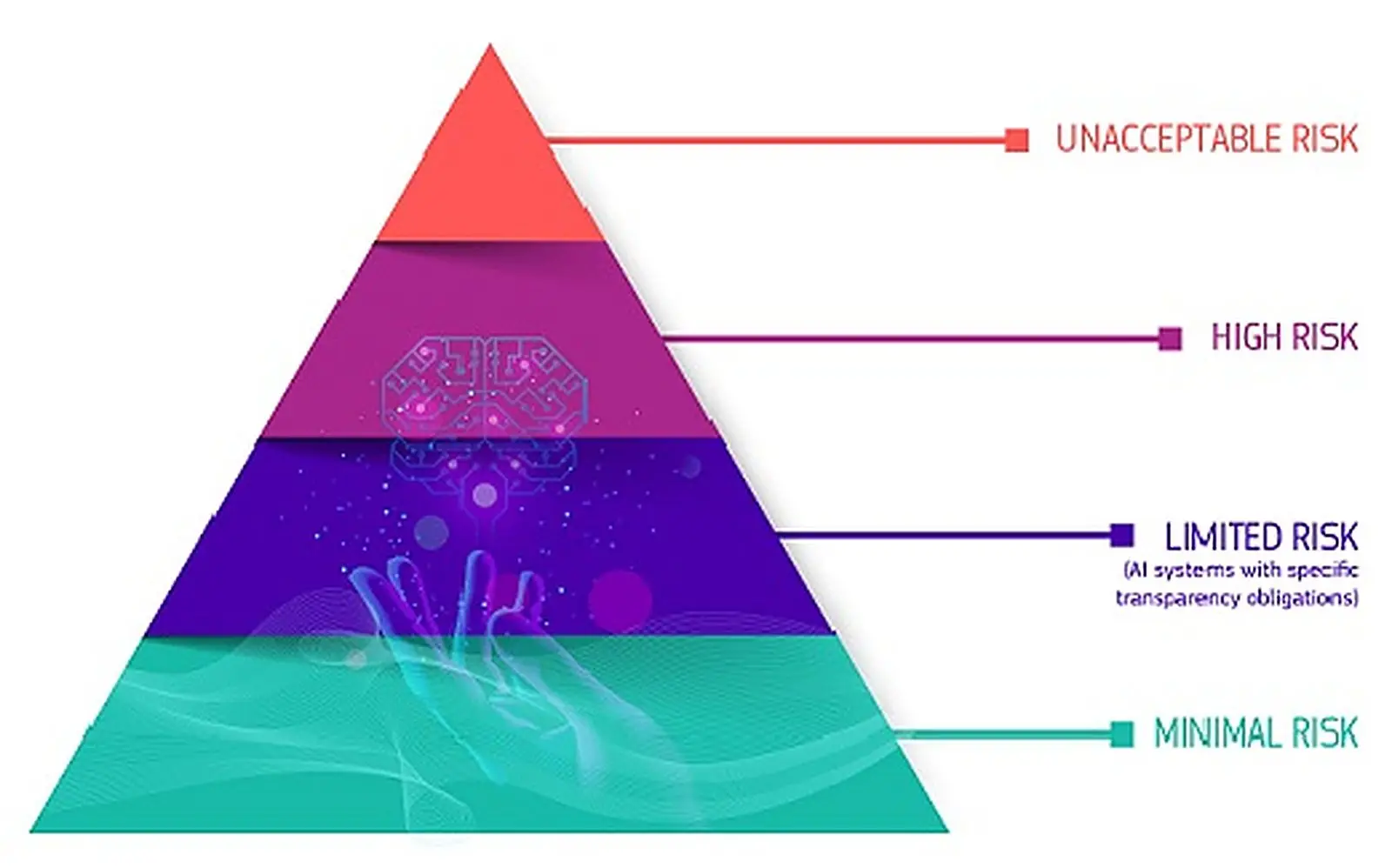
The previous survey was launched before the AI Act entered into force on 01.08.2024. When asked how they would classify their use cases, firms rated only 5 % as high risk. The supervisors noted that this reflected the firms' own perception of risk rather than the legal classification. Some firms labelled anti-money laundering and fraud detection tools as high risk, although these are excluded from Annex III.
The legal picture matters for banks and lenders. Under Annex III, point 5(b), AI systems that assess the creditworthiness of natural persons or set their credit score are high risk, with an exception for fraud detection. Since the AI Omnibus, Regulation (EU) 2026/1744, the obligations for Annex III high-risk systems apply from 02.12.2027, according to the consolidated Article 113. Our AI Act checklist for deployers explains what applies before then.
Luxembourg has not yet passed its national law designating AI Act authorities. Bill 8476 foresees the CNPD as the general authority and sectoral authorities including the CSSF. On 19.11.2026, the Chamber of Deputies still listed the bill as in committee.
What should firms do now?
The questionnaire is a regulatory request, not a marketing survey, and answers will sit next to those of hundreds of peers. Firms in scope can prepare in three steps:
- Open the eDesk procedure early, read the user guide and name one person responsible for the submission.
- Gather an up-to-date list of AI use cases, including public generative AI tools used by staff, with an owner for each.
- Check how each use case would be classified under the AI Act, especially credit scoring, and document human oversight.
The same list is useful beyond the questionnaire. A written AI policy for staff is covered in our guide to AI usage policies, and the governance of AI agents is the subject of the CNPD's new RE.M.I. working group.
The results of the 2026 round have not been published, and the communiqué gives no date for a third report.
Sources
- [1] Nouvelle démarche eDesk – Questionnaire sur l'intelligence artificielle (CSSF, 17.11.2026) accessed 2026-11-19
- [2] Nouvelle démarche eDesk – Questionnaire sur l'intelligence artificielle (CSSF, 19.06.2024) accessed 2026-11-19
- [3] Second thematic review on the use of Artificial Intelligence in the Luxembourg financial sector (CSSF) accessed 2026-11-19
- [4] Second thematic review on the use of Artificial Intelligence in the Luxembourg Financial sector (BCL press release, 16.05.2025) accessed 2026-11-19
- [5] Thematic review on the use of artificial intelligence in the Luxembourg financial sector, 2024 survey (PDF) accessed 2026-11-19
- [6] Thematic review on the use of Artificial Intelligence in the Luxembourg Financial sector (CSSF, 03.05.2023) accessed 2026-11-19
- [7] AI Act Service Desk, Article 113: Entry into force and application accessed 2026-11-19
- [8] AI Act Service Desk, Annex III: High-risk AI systems accessed 2026-11-19
- [9] Chambre des Députés, Règlement européen sur l'intelligence artificielle (projet de loi 8476) accessed 2026-11-19
- [10] BCL, Photos accessed 2026-11-19
- [11] BCL, Copyright accessed 2026-11-19